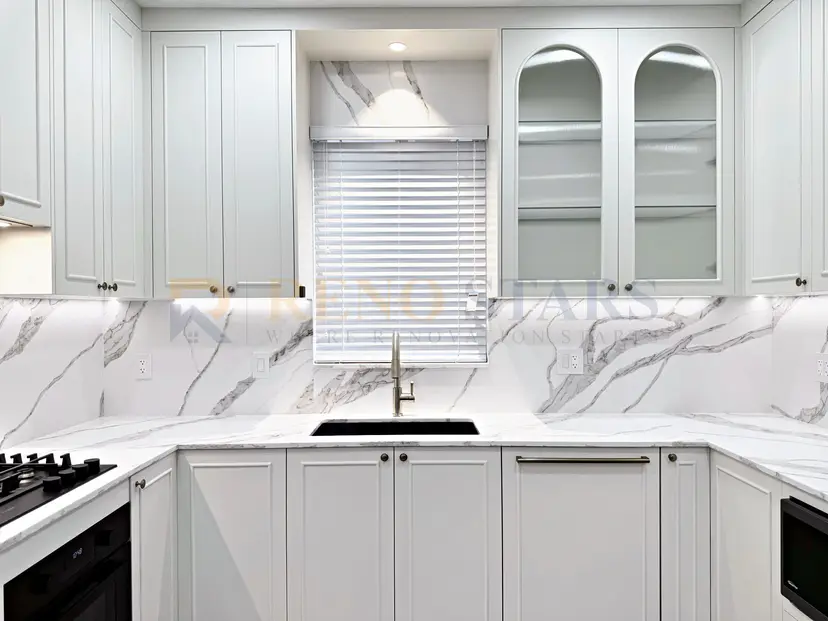
Japandi Renovation in Vancouver & Metro Vancouver 2026: What It Costs and What It Actually Looks Like
Japandi renovation blends Japanese minimalism and Scandinavian function into one of Vancouver's most sought-after renovation styles. See real costs, projects and design principles for 2026.
Japandi renovation blends Japanese minimalism and Scandinavian functionality into a design language that Vancouver homeowners are increasingly requesting in 2026. The look is built on natural materials — light oak, walnut, linen, matte stone — paired with clean furniture lines, muted earth tones and the Japanese principle of mottainai (nothing wasted). Reno Stars has completed Japandi-style whole-home and kitchen renovations across Richmond, Vancouver and Coquitlam, with project costs ranging from $95,000 for a kitchen and two-bathroom transformation to $320,000 for a full home interior overhaul.
This guide covers what Japandi renovation actually costs in Metro Vancouver, which rooms benefit most, and how to plan one with real project data from Reno Stars builds.
What Makes a Renovation Japandi?
Japandi is not a trend — it is a design philosophy rooted in two traditions that share unexpected common ground: Japanese wabi-sabi (beauty in simplicity and imperfection) and Scandinavian hygge (cosiness through function). Both prioritise calm, honest materials and purposeful objects over ornament.
Core characteristics of a Japandi renovation in Vancouver include:
- Neutral palette: warm greige, clay, sage, oat and charcoal — no bright colours or gold hardware unless matte-black instead
- Natural materials: solid oak or walnut millwork, linen upholstery, rice-paper lighting, matte porcelain tile
- Low-profile furniture: platform beds, low-backed sofas, open shelving instead of upper cabinets in kitchens
- Negative space: each object earns its place; clutter is the enemy
- Warm wood tones contrasted with black-steel window frames or lighting fixtures
Unlike purely modern minimalist interiors, Japandi embraces organic texture — the grain of real wood, the irregular weave of linen, the subtle variation in handmade ceramics. This makes material selection critical and rules out laminate or veneer finishes for visible elements.
How Much Does Japandi Renovation Cost in Vancouver and Metro Vancouver in 2026?
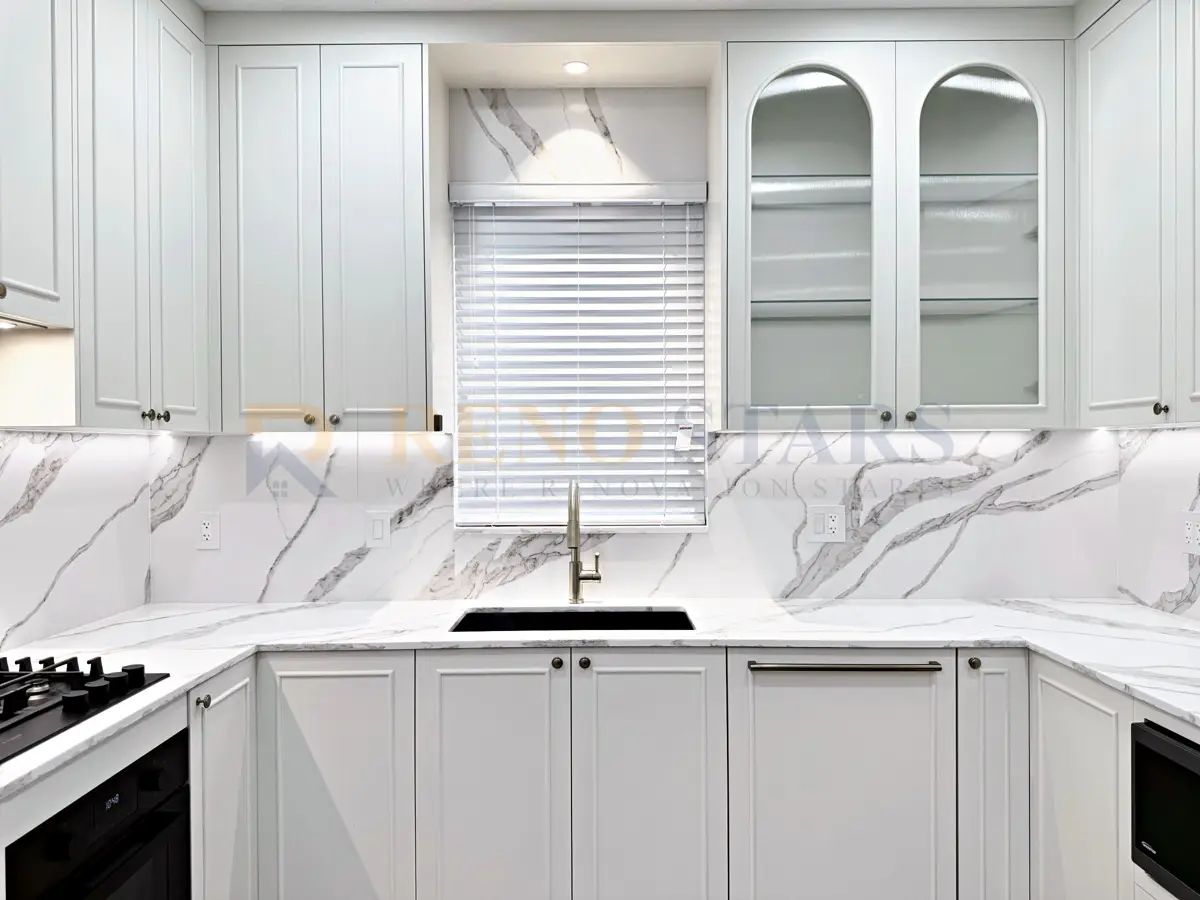
Japandi renovation costs in Vancouver and Metro Vancouver follow the same per-square-foot ranges as premium mid-range renovations, with key cost drivers being material quality and the extent of custom millwork. Budget-conscious Japandi (good materials, minimal custom work) starts around $180 per square foot of renovation space. Mid-range projects with custom walnut millwork, imported tile and quality lighting typically run $250–$350 per square foot. Full high-end Japandi with structural changes, custom built-ins and premium finishes exceeds $400 per square foot.
For specific room types based on Reno Stars project data:
- Kitchen (Japandi style, custom flat-panel oak cabinets, quartz or marble counters, integrated appliances): $65,000–$130,000
- Primary bathroom (matte stone tile, frameless glass, walnut vanity, heated floor): $22,000–$45,000
- Whole-home renovation (all rooms, custom millwork throughout): $180,000–$380,000+
These prices reflect 2026 Vancouver and Metro Vancouver construction and material costs. The Japandi aesthetic does not inherently cost more than any other premium style — the expense comes from the quality of materials and the craftsmanship required to execute clean, flawless joinery.
Which Rooms Work Best for Japandi Design in a Vancouver Home?
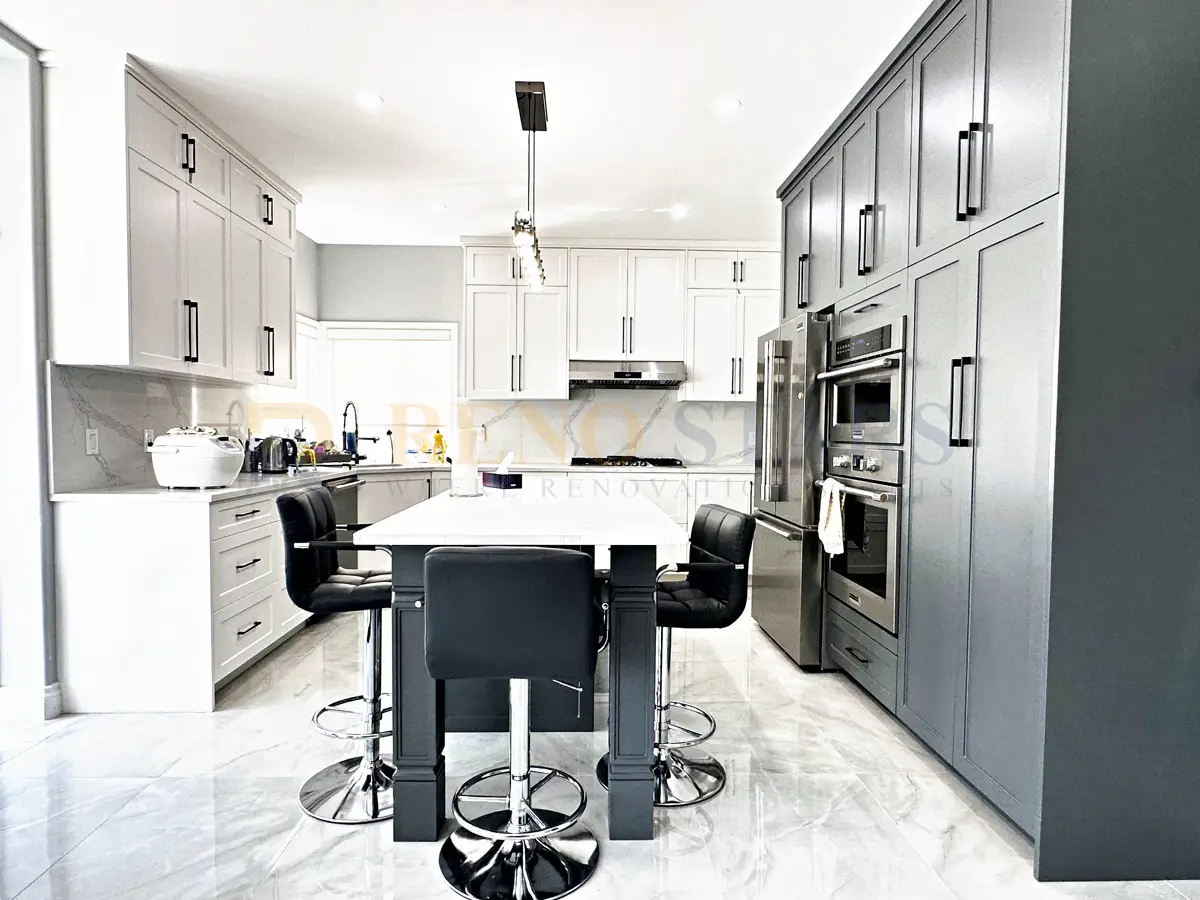
Japandi renovation is most impactful in the rooms that family life centres on: the kitchen, the primary living spaces and the home office. A Japandi kitchen is defined by handleless or black-elongated-handle upper cabinets in a warm neutral lacquer, open shelving instead of some upper cabinets, and a kitchen island with a waterfall quartz or marble edge that bridges the natural-stone and wood elements. Light-toned oak flooring or engineered oak planks with a matte finish ground the palette without adding visual weight.
A Japandi living room benefits from built-in floor-to-ceiling millwork in a light oak or warm greige lacquer, paired with a low-backed sofa in oatmeal or sage linen, a solid-wood side or coffee table with clean lines and paper or rice-stalk pendant lighting. Negative space is not empty — it is deliberate and calming.
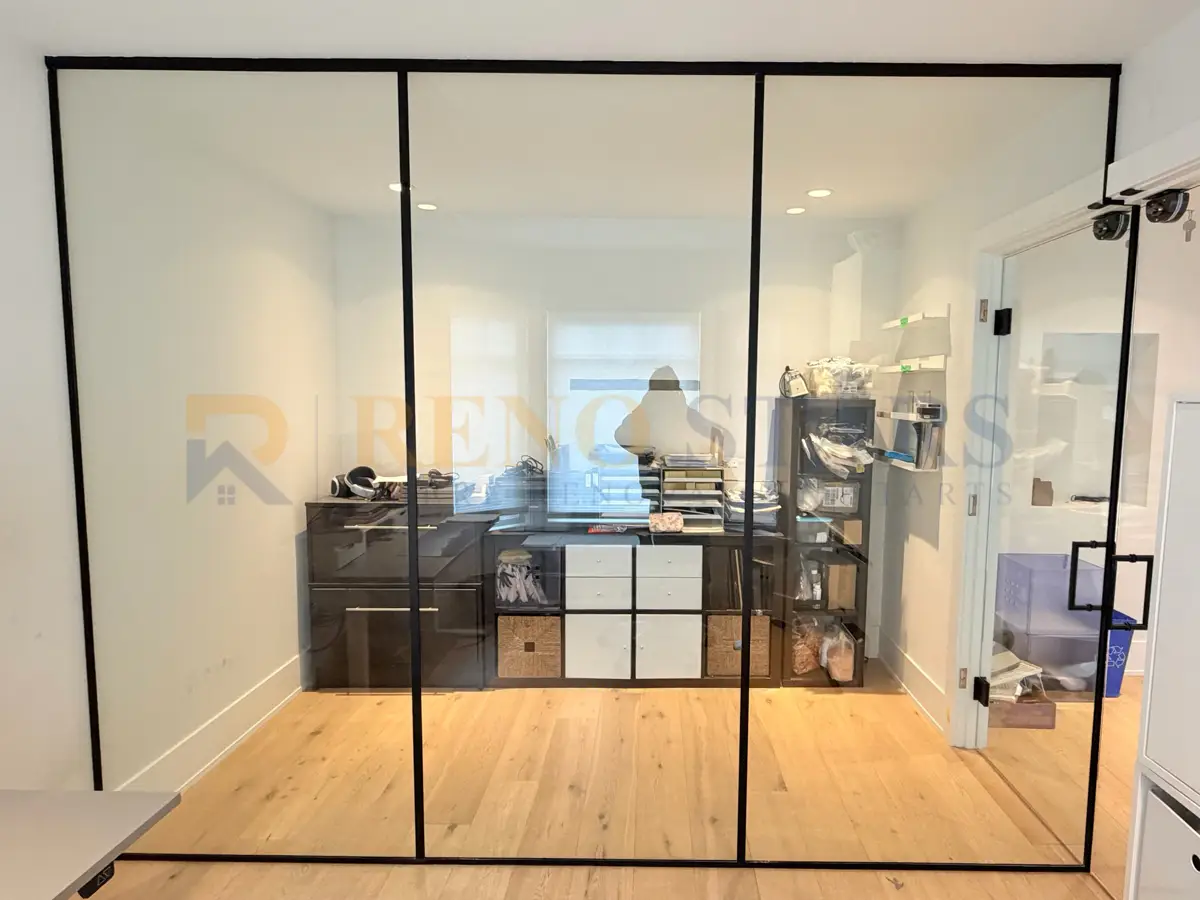
A Japandi home office works especially well in Metro Vancouver condos and townhouses where space is at a premium. A floor-to-ceiling built-in desk and shelving unit in warm oak or maple creates a complete workspace without visual clutter. Black-steel-framed glass partition walls — Reno Stars installed one in a Vancouver home office conversion — let light through while maintaining the Japandi industrial-natural tension that defines the style.
Japandi Design in Vancouver: What Works and What to Plan For
Vancouver's residential architecture — from West Side Vancouver character homes to newer Coal Harbour condos and Richmond townhouses — adapts well to Japandi renovation. The region's established Asian design influence and appreciation for natural materials mean local suppliers and tradespeople are familiar with the aesthetic. BC Building Code requirements for structural changes, fire-rated assemblies and energy efficiency are the same as any other renovation and do not conflict with Japandi principles.
When planning a Japandi renovation in Vancouver or Metro Vancouver, factor in the following:
- Lighting design: Japandi relies on layered natural and artificial light. Plan for recessed ceiling lights, statement pendant fixtures and task lighting before drywall goes up. BC Electrical Code requirements for bedroom and kitchen circuits apply as standard.
- Millwork quality: the clean lines that define Japandi reveal every gap, mitre and inconsistency. Specify solid-wood or plywood-core MDF for painted surfaces, solid walnut or oak for wood elements, and expect a skilled finish carpenter — not a big-box contractor — for visible built-ins.
- Material sourcing: walnut and white oak are available through Vancouver specialty lumber yards; Shoji-screen style sliding panels, linen drapery and rice-paper pendant fixtures are available through Metro Vancouver design showrooms and import suppliers.
- Strata approval: for Vancouver and Richmond condo and townhouse owners, any visible exterior-facing changes to balconies, windows or door hardware require strata council approval before work begins.
Planning a Japandi renovation in 2026 with a contractor who understands natural materials and custom millwork is more important than the design style itself. Reno Stars has completed Japandi-influenced renovations across Richmond, Vancouver, Coquitlam, Delta and Burnaby.
Real Japandi Renovation Projects in Vancouver and Metro Vancouver
Reno Stars has completed renovations across Metro Vancouver that incorporate core Japandi principles. These projects used natural materials, clean millwork and warm neutral palettes to achieve the Japandi aesthetic.
One Richmond whole-home renovation transformed all principal rooms using a marble-look kitchen with flat-panel cabinets, matching bathroom finishes and new oak flooring throughout. The design palette was deliberately restrained — warm greige cabinets, matte black fixtures and minimal ornamentation — consistent with Japandi principles.
A Coquitlam kitchen renovation with a waterfall quartz island demonstrates how the Japandi kitchen island functions as both a functional centrepiece and a material bridge between stone counters and wood flooring. Combined with flat-panel cabinets and integrated appliances, the result is a high-functioning kitchen that reads as calm and uncluttered rather than elaborate.
View the full project galleries at Richmond Whole-Home Renovation and Coquitlam Kitchen Renovation.
Planning a kitchen, bathroom, whole-home or commercial renovation in Vancouver, Richmond, Burnaby, Coquitlam, Delta or North Vancouver? Get a free, no-obligation quote from Reno Stars.
Is Japandi more expensive than a standard Vancouver renovation?
Japandi renovation is not inherently more expensive than other premium renovation styles in Vancouver. The cost drivers — natural materials, custom millwork, skilled finish carpentry — apply to any high-quality build. Where Japandi adds value is in its timelessness: the aesthetic does not date, and quality natural materials hold their value better at resale than trendy finishes.
Can I do a Japandi renovation on a condo budget in Vancouver?
Yes. A targeted Japandi kitchen renovation in a Vancouver condo — flat-panel cabinets in a warm neutral, new quartz countertop, removal of dated bulkhead, integrated appliance package and new matte black or brushed-brass hardware — can cost $28,000–$55,000 depending on scope. The Japandi look is as much about restraint and proportion as it is about material cost.
What colours define Japandi style in a Vancouver home renovation?
Japandi colour palettes centre on warm neutrals: oat, clay, warm greige, sage green, charcoal and natural wood tones. White is used as a grounding element but is rarely bright or cool — warmer whites with a yellow or greige undertone read as genuinely Japandi rather than sterile modern. Black is reserved for hardware, lighting fixture frames and occasionally kitchen tapware, always in a matte finish.
Does Japandi work for a whole-house renovation in Richmond or Burnaby?
Japandi works exceptionally well for whole-house renovations in Richmond, Burnaby, Vancouver and across Metro Vancouver. Applying the same material language — oak or walnut flooring, warm-neutral flat-panel millwork, matte black or brushed-steel fixtures, linen or cotton upholstery — throughout a home creates a cohesive, calm interior that performs well for both daily living and resale value. Reno Stars has completed whole-home renovations in Richmond and Delta using these principles.
How do I find a contractor in Vancouver who understands Japandi design?
Look for a Vancouver renovation contractor with completed projects that demonstrate an understanding of natural materials, custom millwork and restrained design. Ask to see photos of kitchen and living space finishes, not just wide-angle room shots. Japandi details — mitred cabinet returns, consistent grout lines, clean transitions between materials — require a higher standard of finish than standard production builds. Reno Stars maintains a portfolio of completed renovations across Metro Vancouver including Japandi-influenced projects in Richmond, Coquitlam and Vancouver.
Reno Stars
Professional renovation company serving Metro Vancouver with 20+ years of experience, $5M CGL insurance, WCB coverage, and up to 3-year warranty.