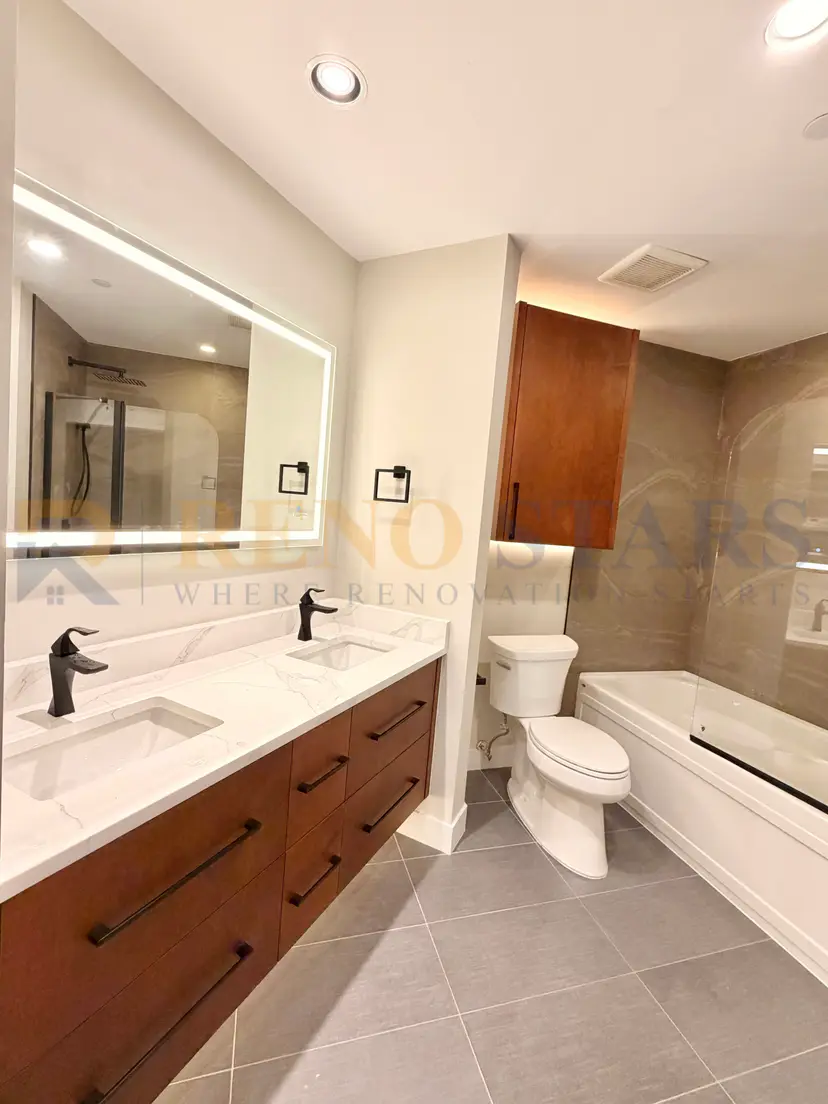
Gastos sa Pagkukumpuni ng Toilet Vancouver 2026: $400 to $8,500+ Tunay na Pagpepresyo
Magkano ba talaga ang pag-aayos ng palikuran sa Vancouver? Ang isang like-for-like two-piece swap ay tumatakbo nang $400–$900 naka-install; isang one-piece elongated run $650–$1,500; isang smart bidet toilet (na may GFCI outlet at supply line work na kailangan nito) ay tumatakbo $1,300–$4,500; ang toilet na nakadikit sa dingding na may in-wall tank carrier ay tumatakbo nang $3,000–$8,500+. Narito ang totoong breakdown mula sa aming kamakailang mga proyekto sa banyo sa Metro Vancouver.
Ang toilet swap ay ang pinakamurang desisyon sa plumbing fixture sa iyong banyo — hanggang sa magsimula kang magdagdag ng mga smart feature, mga carrier na nakadikit sa dingding, o bidet wiring. Pagkatapos ito ay nagiging isa sa pinakamahal. Narito kung ano talaga ang halaga ng pagsasaayos ng banyo sa Metro Vancouver noong 2026, na pinaghiwa-hiwalay ayon sa antas at batay sa totoong Reno Stars data ng proyekto. Bahagi ng ating gabay sa gastos sa banyo renovation — tingnan ang buong paghahati-hati ayon sa bilang ng piraso, istilo ng disenyo, at ang iba pang cluster ng halaga ng banyo.
Mabilis na buod ng presyo
| Saklaw | Gastos sa pag-install ng Vancouver | Lead time | Pinakamahusay para sa |
|---|---|---|---|
| Basic two-piece swap | $400 – $900 | 1–2 oras | Mga upa, pangalawang paliguan, mabilis na pag-refresh |
| Isang piraso na pinahabang kaginhawaan-taas | $650 – $1,500 | 2–3 oras | Karamihan sa mga pagsasaayos ng bahay-pamilya |
| Skirted one-piece + soft-close na upuan | $900 – $2,000 | 2–4 na oras | Modernong hitsura, mas madaling paglilinis, mga master ensuite |
| Smart / bidet toilet (Toto, Kohler Numi) | $1,300 – $4,500 | 3–6 na oras | Aging-in-place, hygiene-focused, master ensuite |
| Wall-hung + in-wall tank carrier | $3,000 – $8,500+ | 1–2 araw | Mga luxury master ensuite, maliliit na powder room na nagre-reclaim ng espasyo sa sahig |
Ang mga presyo ay naka-install at kasama ang banyo mismo, bagong wax ring o rubber gasket, supply line, pagpapalit ng shutoff valve (kung kinakailangan), at pagtatapon ng lumang kabit. Ang pag-aayos ng flange, mga subfloor na patch, GFCI outlet work para sa smart toilet, at structural work para sa wall-hung carrier ay sinisingil nang hiwalay.
Ano ang nagtutulak sa presyo
1. Toilet mismo (50–80% ng kabuuan)
Ang presyo ng kabit ay ang pinakamalaking driver. Mga kategoryang pinakamadalas naming ini-install:
- Basic two-piece (Glacier Bay, American Standard Champion): $200–$500 kabit. Naka-bold ang tangke sa ibabaw ng mangkok, ang pinakamurang daanan. Gumagana nang maayos para sa mga rental at pangalawang banyo.
- Isang piraso na pinahabang kaginhawaan-taas: $400–$1,000 kabit. Ganap na pinagsama-samang tangke/mangkok, walang tahi na linisin, ang comfort-height (17"–19") ay tumutugma sa modernong kagustuhan. Ang default na pagpipilian para sa karamihan ng mga reno.
- Naka-skirt na one-piece (Toto Aquia, Kohler Veil): $700–$1,800 kabit. Itinatago ng mga makinis na patag na gilid ang trapway — mas madaling linisin, mas mukhang designer.
- Smart / bidet toilet (Toto Washlet, Kohler Numi): $800–$3,500+ kabit. Pinainit na upuan, pinagsamang bidet wand, deodorizer, auto-flush, ambient light. Ang Toto S550e ay ang pamantayan ng sambahayan sa ~$1,200; Ang Kohler Numi 2.0 ay tumama sa $7,000+ sa tuktok na dulo.
- Wall-hung bowl (Geberit, TOTO wall-hung): $400–$1,500 para sa bowl lang, plus $400–$1,200 para sa in-wall tank carrier. Ang kabuuang halaga ng fixture ay tumatakbo $800–$2,700 bago i-install.
2. Paggawa sa pag-install ($200–$1,500)
Mga sukat ng gastos sa pag-install na may kumplikado:
- Like-for-like two-piece swap: $200–$400 (~1–2 oras ng tubero, walang flange work)
- One-piece swap na may bagong shutoff + supply line: $300–$500
- Smart toilet swap na nangangailangan ng GFCI outlet: $500–$1,000 (nagdagdag ang electrician ng $250–$500 para sa pag-install ng GFCI, tubero ang natitira)
- Wall-hung install na may in-wall tank carrier: $1,000–$2,500 paggawa (i-frame ang dingding, itakda ang carrier, drywall + tile sa paligid nito, huling pagkakabit ng mangkok)
- Paglipat ng alisan ng tubig (gumagalaw ang banyo nang higit sa 12"): $800–$2,500 idinagdag (cut subfloor, muling idikit ang ABS, bagong closet flange, minsan bagong vent)
3. Flange + subfloor work ($150–$1,200 add kapag kailangan)
Ang flange ng closet (ang plastik o tansong singsing na nagtatakip sa banyo sa drain pipe) ay kadalasang nabibitak habang nagpapalit o nabibitak na mula sa nakaraang pagkakabit. Ang pagpapalit ay tumatakbo $150–$300. Pre-1990 Vancouver na mga tahanan ay regular na nagpapalabas ng bulok na subfloor sa ilalim ng palikuran mula sa mabagal na pagtagas — ang paglalagay sa subfloor ay nagdaragdag ng $300–$1,200 depende sa lawak ng pagkabulok. Palaging magbudget para dito sa alinmang tahanan na mas matanda sa 30 taon.
4. Smart-toilet electrical ($250–$700 add)
Ang bawat smart/bidet toilet ay nangangailangan ng GFCI outlet sa loob ng 36" ng unit. Kung wala ang isa (karamihan sa mga bahay sa Vancouver na itinayo bago ang 2010 ay walang isa sa likod ng palikuran), ang isang electrician ay nagpapatakbo ng bagong wire mula sa pinakamalapit na pinagmulan. Depende ang gastos sa pag-access sa dingding:
- Bukas ang pader (sa panahon ng pagsasaayos): $250–$400
- Surface-mount conduit (pangit ngunit mura): $250–$400
- Fish wire sa pamamagitan ng tapos na pader: $400–$700
- Concrete-floor condo na walang malapit na outlet: $600–$1,200
5. Wall-hung carrier + structural ($600–$3,000 add)
Napakaganda ng toilet na nakadikit sa dingding at nagpapalaya ng ~9"–12" ng espasyo sa sahig — ngunit ang tangke sa loob ng dingding ay nangangailangan ng structural carrier (Geberit Duofix o katumbas) na naka-angkla sa mga stud at floor plate. Mga gastos na idinagdag sa kabila ng carrier mismo:
- 2x6 wall framing kinakailangan (hindi kasya ang carrier sa 2x4): $600–$1,200 kung ang mga pader ay bukas, $1,500–$3,000 kung ang mga pader ay tapos na at kailangang buksan
- Ang drywall + tile ay gumagana upang isara ang pader sa paligid ng carrier: $400–$1,200 depende sa pagiging kumplikado ng tile
- Engineered floor reinforcement sa second-floor wood-frame: $300–$800 kung ang mga joists ay nangangailangan ng sistering
Kung saan gumagastos ang mga may-ari ng bahay sa Vancouver
- Pagbili ng Kohler Numi 2.0 ($7,000+) para sa pangalawang banyo. Ang Numi ay hindi kapani-paniwala ngunit ang mga tampok nito (motion-activated lid, ambient lighting, voice control) ay nasasayang sa isang guest bath na ginagamit 2× bawat buwan. Tumukoy ng Toto S550e ($1,200) para sa anumang hindi pangunahing paliguan; ireserba ang punong barko para sa master.
- Wall-hung toilet sa isang maliit na powder room na walang 2x6 dingding. Ang pagbubukas ng tapos na 2x4 wall para magdagdag ng 2x6 framing para sa isang Geberit carrier ay ginagawang $5,500 mini-renovation ang $2,500 powder room toilet. Kumpirmahin ang lalim ng pader bago gumawa sa wall-hung.
- Smart toilet na walang GFCI outlet na binalak. Ang upuan ng bidet ay nangangailangan ng kapangyarihan. Nakita namin ang mga may-ari ng bahay na nag-install ng $2,500 Toto Washlet para lang matuklasan na walang saksakan — ang surface-mount conduit ay sumusunod, at ang pag-install ay nagmumukhang nahuling isip. Planuhin ang outlet sa panahon ng demo, hindi pagkatapos.
Kung saan ang mga may-ari ng bahay ay under-spec
- Pagpili ng 16" standard-height bowl sa isang forever home. Ang comfort-height (17"–19") ay ang modernong default para sa isang kadahilanan — pinahahalagahan ito ng mga tuhod sa bawat edad. Ang $50–$100 upgrade ay kabilang sa pinakagusto sa isang 20-taong hold.
- Nilaktawan ang soft-close na upuan. Ang $50–$100 add ay nag-aalis ng slamming para sa buhay ng banyo. Laging isama sa spec.
- Nakalimutan ang bidet attachment sa isang hindi matalinong banyo. Kahit na hindi saklaw ng budget ang isang Toto Washlet, ang $50–$100 mechanical bidet attachment (hindi kailangan ng kuryente) ay nakakakuha ng 80% ng function. Ang Tushy Classic ay ang go-to.
Mga tunay na gastos sa banyo sa Vancouver mula sa mga kamakailang proyekto
- Yaletown rental refresh, basic two-piece swap: $450 naka-install (Glacier Bay round-front 2-piece, bagong shutoff + supply line)
- Burnaby SFH master ensuite, naka-skirt si Toto Aquia ng one-piece: $1,400 naka-install (toilet $850, install $300, new flange $150, new shutoff $50)
- Coquitlam karaniwang paliguan, Toto Washlet S550e sa umiiral nang one-piece: $1,650 naka-install (Washlet $1,150, GFCI outlet $400 fish-through finished wall, install $100). Proyekto: Coquitlam banyo
- Maple Ridge banyo, buong Toto S550e smart toilet (one-piece + integrated bidet seat): $2,800 naka-install sa panahon ng full bath reno (toilet $2,200, GFCI outlet habang open-wall demo $250, install $350)
- Kanlurang Vancouver marangyang ensuite, Toto + Geberit Duofix carrier na nakadikit sa dingding: $5,400 naka-install (carrier $1,200, wall-hung bowl $1,800, Toto Washlet $1,200, framing + drywall + tile sa paligid ng carrier $1,000, plumber labor $200)
Smart vs basic: kung paano magpasya
Ang tanong sa matalinong banyo ay halos palaging tungkol sa mga priyoridad ng sambahayan, hindi budget. Mabilis na filter:
- Ang pangunahing two-piece ay maayos kung: paupahang ari-arian, pangalawang paliguan na ginamit < 5×/linggo, o hindi mo lang na-enjoy ang bidet feature.
- Ang one-piece comfort-height ay ang default kung: pangunahing paliguan, tahanan ng pamilya, gusto ang mas malinis na hitsura nang walang kumplikadong smart-feature.
- Magbabayad ang smart / bidet toilet kung: primary master ensuite, mga miyembro ng sambahayan 50+ na nagpaplanong tumanda sa lugar, sambahayan na nakatuon sa kalinisan, O muling ibinebenta ang isang marangyang bahay (ang mga smart toilet ay nagbabasa ng "premium" sa karamihan ng mga mamimili sa Metro Vancouver).
- Sulit ito kung: maliit na powder room kung saan mahalaga ang floor space, O full-gut master ensuite kung saan ang modernong hitsura ay hindi mapag-usapan. Kung hindi, ang premium ng gastos ay hindi proporsyonal sa benepisyo.
Paano magbudget ng iyong trabaho sa banyo
- Magpasya muna ng tier (basic / one-piece / smart / wall-hung). Ang bawat baitang ay nagbabago ng budget sa paggawa sa ibaba ng agos.
- Kumpirmahin ang outlet ng GFCI kung magiging matalino. Kung hindi, kunin ang quote ng electrician bago mag-commit sa isang smart toilet.
- Kumpirmahin ang 2x6 na pader kung nakadikit sa dingding. Ang mga karaniwang 2x4 na pader ay hindi tumatanggap ng carrier ng Geberit Duofix.
- Budget $300 contingency para sa flange + subfloor surprises. Ang mga tahanan sa Vancouver bago ang 1990 ay karaniwang lumalabas sa bulok na subfloor kapag lumabas ang lumang palikuran.
- Mag-order ng 2 linggo nang mas maaga para sa mga matalinong palikuran. Nagpapadala ang Toto Washlets mula sa mga bodega ng supplier — pinahaba ng mga backorder ang lead time.
Mga kaugnay na gabay sa gastos
- Gastos sa Banyo Renovation Vancouver: $10K–$60K Tunay na Data — ang gabay ng magulang para sa buong halaga ng banyo
- Gastos sa Pagkukumpuni ng Bathtub Vancouver: $800–$8,500+ — parehong lalim sa mga bathtub
- Gastos sa Pagkukumpuni ng Shower Vancouver 2026 — mga conversion ng tub-to-shower, curbless walk-in shower, at mga pag-upgrade ng glass enclosure
- Gastos sa Vanity Renovation Vancouver: $700–$7,200+ — parehong lalim sa mga vanity sa banyo
- Mga Serbisyo sa Banyo Renovation — kung ano ang ginagawa natin, kung paano tayo nagtatrabaho
Tingnan ang aming na-verify na limang-star na review mula sa mga may-ari ng bahay sa Metro Vancouver.
Tungkol sa Reno Stars — kumpanya ng pagsasaayos na nakabase sa Vancouver na naglilingkod sa Metro Vancouver mula noong 2019.
Gusto ng isang tunay na quote sa iyong trabaho sa banyo? Padalhan kami ng larawan ng kasalukuyang setup at kung ano ang iyong isinasaalang-alang, at babalik kami sa loob ng 48 oras na may tatlong mga opsyon sa presyo sa mga tier sa itaas. Kumuha ng libreng konsultasyon sa bahay.
Metro Vancouver homeowners increasingly include a heat pump HVAC upgrade in their renovation plans — these systems provide efficient heating and cooling year-round, and qualify for BC Hydro and CleanBC rebate programs.
When renovation projects add new appliances, EV charging stations, or smart home systems, a critical load panel upgrade is often needed to safely handle the increased electrical load.
Frequently Asked Questions
How much does toilet installation or replacement cost in Vancouver?
Toilet replacement costs in Metro Vancouver range from $400 to $2,500+ depending on the toilet and any plumbing involved. A standard toilet supply + installation (same rough-in location): $400–$800. Mid-range comfort-height elongated toilet with bidet seat: $800–$1,500. Moving the toilet to a new rough-in location (requires plumbing work): add $1,500–$4,000. Wall-hung toilets with in-wall carrier and tank: $2,000–$5,000 all-in. Macerating toilets for below-grade bathrooms: $1,200–$3,000. No permit is required for a like-for-like toilet replacement at the same rough-in. A plumbing permit is required when moving the drain.
What is a comfort height toilet and should I get one in Vancouver?
A comfort-height toilet (also called ADA-height or right-height) sits 17–19 inches from floor to seat — 2–4 inches higher than a standard toilet (15 inches). Most Metro Vancouver homeowners over 40 find comfort-height significantly easier on knees and hips when sitting and standing. Comfort-height is universally recommended for aging-in-place bathrooms and is now the default choice for primary bathrooms in new Vancouver renovations. Children and people under 5'4" may find the extra height awkward. Reno Stars installs comfort-height as the default in any bathroom renovation unless the client specifically prefers standard height.
Do I need a permit to replace my toilet in Vancouver?
No permit is required for a like-for-like toilet replacement in Metro Vancouver — if you're removing the old toilet and installing a new one in the exact same rough-in location (standard is 12" rough-in from wall), no permit needed. A plumbing permit IS required if you're: moving the toilet to a different location (requires rerouting the drain), installing a toilet in a new bathroom (permit required for the entire new bathroom), or replacing a toilet in a strata unit that requires strata approval (this is a strata bylaw matter, not a building permit). See our guide to BC Strata Renovation Rules for Metro Vancouver homeowners. Reno Stars confirms permit requirements before any plumbing work.
What is the most water-efficient toilet for Vancouver in 2026?
BC's Plumbing Code requires a maximum 6L/flush for new toilet installations (standard flush). Dual-flush toilets offer 3L (half flush) and 6L (full flush). The most water-efficient toilets certified for BC in 2026: TOTO Drake II (1.28 gpf / 4.8L), Kohler Wellworth with ReadyLock (1.28 gpf), American Standard H2Option dual flush (1.0/1.6 gpf). Metro Vancouver's Tap Smart program has offered rebates for high-efficiency toilets in the past — check gvrd.ca for current 2026 rebate availability. Reno Stars specifies WaterSense-certified toilets as the default on all bathroom renovation projects.
How do I know if I need a 12-inch or 14-inch rough-in toilet in Vancouver?
Measure from the finished wall (not the baseboard) to the centre of the toilet bolts. A 12-inch rough-in is standard in most Metro Vancouver homes built after 1960. Older homes (pre-1960, particularly Vancouver Special era) sometimes have 10-inch or 14-inch rough-ins. If you measure anything other than 12 inches, you'll need a specific toilet for that rough-in — or a plumber to adjust the flange location. Getting this wrong means the new toilet either doesn't fit, gaps from the wall, or covers a different footprint. Reno Stars measures before ordering any toilet on bathroom renovation projects.
How long does a toilet replacement take in Vancouver?
A standard toilet replacement (remove and reinstall, same rough-in, no plumbing changes) takes 2–4 hours for an experienced plumber. A wall-hung toilet installation requiring a new in-wall tank carrier takes 1–2 days. A toilet replacement that also involves addressing a damaged wax ring seal or repairing the subfloor around a leaking base takes 1–2 days depending on extent. Most toilet replacement projects in Vancouver don't require a permit (like-for-like replacement, no rough-in changes). Moving the toilet rough-in to a new location requires a plumbing permit. Older Metro Vancouver homes may also need our Poly-B Pipe Replacement service to eliminate unsafe plastic piping.
Also see: Vancouver renovation cost complete guide | Basement Renovation Vancouver | How to Finance Your Vancouver Renovation (HELOC Guide) | Renovation Financing Options | Average Bathroom Renovation Cost Vancouver | Glass Shower Doors Vancouver | Bathroom Renovation Planning Guide | 3-Piece vs 4-Piece Bathroom | Tub vs Shower Vancouver | Small Bathroom Ideas Vancouver | Burnaby Bathroom Renovation | Best Bathroom Tiles Vancouver | Home Renovations in Vancouver | Kitchen Renovation Vancouver | Cabinet Refinishing | Pre-Sale Renovation Advice | Vancouver Renovation Cost Guide 2026 | BC Renovation Permits Guide | How to Choose a Contractor | Renovation Timeline Guide
See Also — Renovation Cost Guides
- Kitchen Renovation Cost Vancouver — average $15K–$80K in Metro Vancouver
- Basement Renovation Cost Vancouver — average $20K–$80K
- Cabinet Refinishing Cost Vancouver — from $4K for refinishing
Reno Stars
Professional renovation company serving Metro Vancouver with 20+ years of experience, $5M CGL insurance, WCB coverage, and up to 3-year warranty.