Summer Renovation in Vancouver 2026: Best Projects for Dry-Season Construction
Vancouver's summer is short but it's the best renovation window for exterior work, whole-house projects, and anything that needs dry air. Here's what to schedule for June–August 2026 and what it actually costs.
Vancouver's rainy-season reputation is well-earned. Between November and April, a renovation crew loses entire days to downpours, stucco and exterior paint don't cure properly, roofs can't be opened up, and the ground is too wet for foundation work. That's why summer — roughly June through mid-September — is the single best renovation window on the West Coast.
If you have flexibility in your project start date, here's how to use Vancouver's dry months well.
Why summer wins in Vancouver
- Dry air. Exterior paint, stucco, concrete, and wood finishes all need low humidity to cure properly. Vancouver summers average 40–55% relative humidity vs. 75–85% in winter.
- Longer daylight. Trades can start at 7 a.m. and push to 8 p.m. legally. That's 13 productive hours vs. 8 in December.
- Kids are out of school. Families with whole-house renovations often use summer break to vacate the house during the disruptive weeks.
- No frozen-ground delays. Foundation, drainage, and landscape work that the rainy months routinely stall cruise through in summer.
- HVAC testing is realistic. You can commission air conditioning properly. In winter you simply can't know whether the summer cooling works until the next June.
Projects that benefit most from summer scheduling
1. Whole-house renovations (especially if you're vacating)
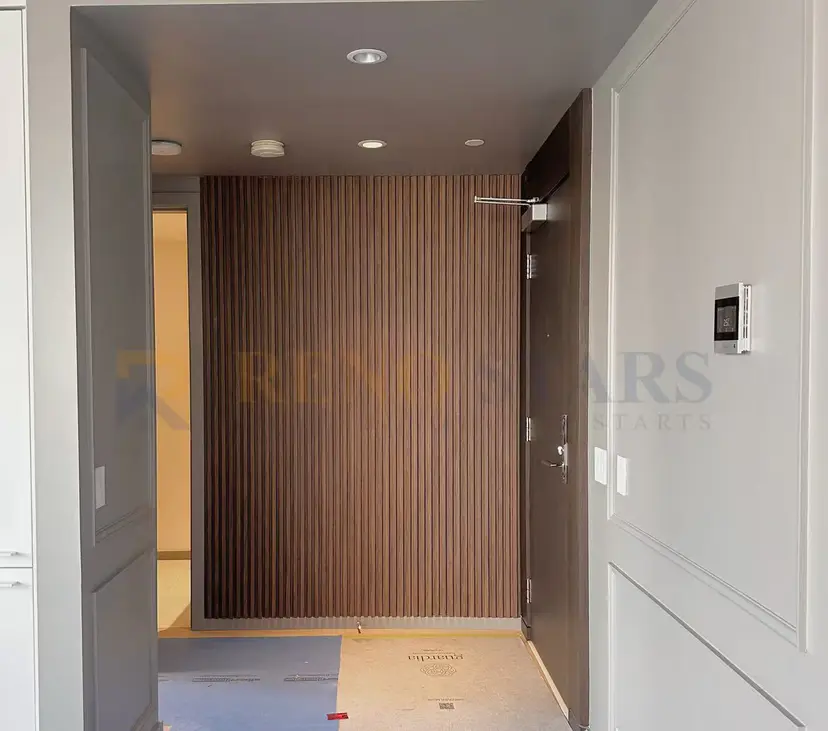
Whole-house jobs are the #1 summer project because families can move out, the crew can work 7 a.m. to 8 p.m., and the exterior envelope (siding, windows, roof) can be opened up without tarping against rain.
Real example from our portfolio: a Vancouver custom whole-house renovation at $25,000–$27,000 over 2–3 weeks — a fast summer job that would easily stretch to 4–5 weeks in January because of weather-dependent tasks. For a whole-house renovation with bathroom updates in Vancouver we delivered $23,000–$25,000 in 4–5 weeks. For larger scopes see our whole-house renovation cost guide.
2. Exterior painting, siding, and stucco
Paint on exteriors needs 10°C+ and low humidity to cure. Vancouver's June–August is the only reliable window. Budget: $6,000–$18,000 for a typical 1,800–2,400 sq ft detached home exterior repaint; $40,000–$80,000 for full re-siding depending on material (fibre cement, engineered wood, or stucco).
3. Roofing
Roof tear-off and replacement absolutely requires dry weather. Asphalt shingle roof on a 2,200 sq ft home runs $9,000–$14,000 in 2026. Metal roofing runs $18,000–$30,000 for the same footprint. Book early — good crews are often fully booked by April for the summer season.
4. Windows and patio doors
Full window replacement means the house is open to the weather for hours per window. Summer is the only time you can do a whole-house window swap without stress. Budget: $700–$1,400 per window installed for triple-glazed vinyl (the baseline for BC energy code in 2026).
5. Kitchen renovations | Pre-Sale Renovation Advice (open-concept, significant structural)
Kitchen jobs with exterior implications — bumping out a wall, adding a window, relocating the range hood vent — are much faster in summer. Our Langley kitchen renovation with waterfall island ran $28,000–$30,000 over 4–6 weeks; a budget-friendly kitchen in Coquitlam was $25,000–$27,000 in 5–6 weeks. See the full kitchen renovation cost guide for more benchmarks.
6. Bathroom renovations in older homes
When plumbing or venting needs to pierce exterior walls or the roof, summer is the friendly season. Older Metro Vancouver homes may also need our Poly-B Pipe Replacement service to eliminate unsafe plastic piping. Our Master Bathroom Renovation in Vancouver came in at $14,000–$16,000 over 4–5 weeks. For cost context across sizes, see the bathroom renovation cost guide.
7. Outdoor work — decks, patios, fences
Obvious summer projects. Cedar deck: $45–$70 per sq ft installed. Composite deck: $55–$95 per sq ft. Stamped concrete patio: $25–$45 per sq ft. All weather-dependent.
8. Foundation underpinning or basement waterproofing
The ground is dry, the water table is low, and excavation stays open without becoming a pond. If you've been putting off waterproofing, summer is the time.
What NOT to schedule for summer if you can help it
- Interior-only cosmetic work. Drywall, trim, paint, interior flooring — these are just as efficient in January. Don't waste the dry-season window on them.
- Kitchen cabinet swaps. No exterior element, no weather sensitivity. Save summer slots for weather-dependent work.
- Powder room refresh. Same logic — small interior jobs are winter-friendly.
The summer 2026 scheduling problem
Every Vancouver renovation company is busiest in summer. If you call in May looking to start in June, you're probably six weeks too late for the good crews. The practical scheduling timeline for a summer 2026 project is:
- January–February: Initial consultation, ballpark budget, scope definition.
- March: Design, product selection, and signed contract.
- April–May: Permit application and product ordering.
- June–August: Construction.
If you want to start in July 2026, you should be in design now (April 2026) and applying for permits in May. We're already booking into August.
Summer-specific renovation tips
- Book air-conditioning work early. HVAC teams are flat out in July and August. If you want AC installed for summer 2026, the time is April–May.
- Check wildfire smoke days. June–September occasionally brings smoke that halts exterior painting and sanding. Build a day or two of buffer into the schedule.
- Plan for noise. Longer work hours are legal but still intrusive. Tell the neighbours before the crew shows up.
- Test the sprinklers before work starts. Contractors often need to disconnect irrigation. Know where the shutoff is.
- Lock in pricing now. Material prices ease slightly in summer but labour rates rise. Signed contracts beat floating estimates.
Planning your summer 2026 project
If you're ready to start thinking about a summer build, look at our recent projects for realistic scope and budget benchmarks, and the whole-house or bathroom cost guides for detailed cost breakdowns. For anything structural or requiring a permit, start the conversation at least 10–12 weeks before you'd like construction to begin.
When renovation projects add new appliances, EV charging stations, or smart home systems, a critical load panel upgrade is often needed to safely handle the increased electrical load.
For homeowners planning long-term or accommodating family members with mobility needs, accessible bathroom renovations — including grab bars, curbless showers, and slip-resistant flooring — are a smart addition to any major renovation project.
If you live in a strata property (condo or townhouse), review BC's strata renovation rules before starting work — many projects require strata council approval and must follow specific noise, hour, and contractor requirements.
Frequently Asked Questions
Why is summer the best time to renovate in Vancouver?
Vancouver summers (June through mid-September) offer the best renovation conditions on the West Coast: average relative humidity drops to 40–55% from winter's 75–85%, daylight extends to 13+ productive hours per day, and exterior work like stucco, roofing, and exterior paint can proceed without weather delays. Most exterior finishes have strict minimum temperature and humidity requirements that cannot be reliably met between October and April in the Lower Mainland.
What renovation projects are best suited for summer scheduling in Vancouver?
Projects that benefit most from summer scheduling include exterior painting and stucco, roofing and skylight installation, deck and fence construction, foundation waterproofing, and any work requiring open wall or roof cavities for extended periods. Interior projects like kitchen renovations also benefit because contractors have more scheduling flexibility and windows can stay open for dust and fume ventilation during the dry season. Consider our Heat Pump Installation Vancouver service to upgrade heating and cooling with modern energy-efficient systems.
Is it harder to book a contractor in summer because demand is higher?
Yes — summer is peak season for Metro Vancouver contractors. Quality renovation companies often book 6–12 weeks out from June onward. However, this is also the season when companies are fully staffed and running at peak efficiency. The trade-off: you may wait longer for a start date, but the project itself typically moves faster and is less prone to weather-related delays than a fall or winter start.
How much more expensive is a summer renovation versus the off-season?
Labour rates typically do not change seasonally for established renovation companies. Some material prices (lumber, composite decking) fluctuate with demand. The bigger financial consideration is avoiding costly weather-related rework — a roof opened up in November carries real moisture risk; the same job in July does not. The cost of delays and remediation from weather damage can easily exceed any off-season price advantage.
What Vancouver renovation projects should I avoid starting in late summer 2026?
Avoid starting complex multi-phase renovations in late August or September if your project requires exterior closure before winter — the window to close a house before October rains is narrow. Also avoid projects with long permit lead times unless the permit is already approved; a June submission in the City of Vancouver can mean an August approval, compressing your usable construction window significantly.
What outdoor renovation projects are best suited to Vancouver's summer weather?
Vancouver's dry summer (July–September averages 45mm rainfall vs 175mm in November) makes it ideal for outdoor renovation work: Deck construction or replacement — dry ground and curing conditions for concrete footings; wood staining and sealing cures properly in warm weather. Exterior painting — requires dry conditions and temperatures above 10°C; Vancouver's summer consistently delivers both. Fence replacement — digs and pours easier in dry soil. Exterior cladding or siding work — moisture-sensitive installation. Roofing — flashing sealants cure properly. Landscaping and retaining wall construction. All these projects require 4–8 weeks of dry conditions to complete properly — making the June–September window in Vancouver the critical booking period.
Also see: Vancouver renovation cost guide 2026 | Spring renovation checklist Vancouver | Vancouver Kitchen Renovation | Vancouver Bathroom Renovation | Vancouver Home Renovation Guide | How to Finance Your Vancouver Renovation (HELOC Guide) | Renovation Financing Options | BC Renovation Permits Guide | Vancouver Renovation Cost Guide 2026 | How to Choose a Contractor | Renovation Timeline Guide | Basement Renovation Vancouver
See our verified five-star reviews from Metro Vancouver homeowners.
About Reno Stars — Vancouver-based renovation company serving Metro Vancouver since 2019.
Ready to get started? Book your free consultation →
See Also — Renovation Cost Guides
- Basement Renovation Cost Vancouver — average $20K–$80K
- Cabinet Refinishing Cost Vancouver | Cabinet Refinishing Vancouver — from $4K for refinishing
Reno Stars
Professional renovation company serving Metro Vancouver with 20+ years of experience, $5M CGL insurance, WCB coverage, and up to 3-year warranty.