
How to Choose Bathroom Vanities and Faucets in Vancouver (2026): Size, Finish, and Material Guide
Vanity width, faucet finish, and countertop material are the three choices Vancouver homeowners regret most when they get them wrong. This guide covers each decision with real project examples from Metro Vancouver bathrooms.
Choosing a bathroom vanity and faucet feels like a design decision, but two of the three choices homeowners most often regret are functional — the size you can actually fit, and whether the faucet finish survives Vancouver's water. The third is the countertop material. Reno Stars has completed bathroom renovations across Burnaby, Richmond, Delta, North Vancouver, and West Vancouver in 2026. This guide shares what the real projects taught us.
What vanity width fits your bathroom?
The most common sizing mistake is buying a vanity based on the look before measuring the actual clearance. In a typical Vancouver condo or townhouse bathroom, you need a minimum of 90 cm (36 inches) of floor space in front of the vanity to open drawers and stand comfortably. Standard vanity widths in Canadian home centres run 60 cm, 90 cm, 120 cm, and 150 cm.
- 60 cm (24 in): powder room or tight secondary bath
- 90 cm (36 in): master bath baseline — fits a single sink plus storage
- 120 cm (48 in): double-sink master bath, requires 150 cm vanity cabinet
- 150 cm (60 in): luxury master bath, needs sufficient wall length for two mirrors
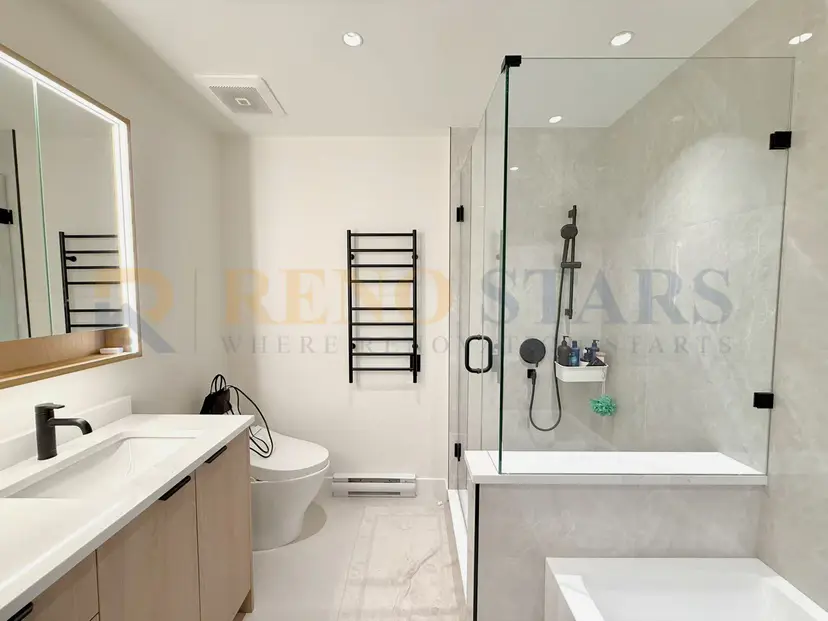
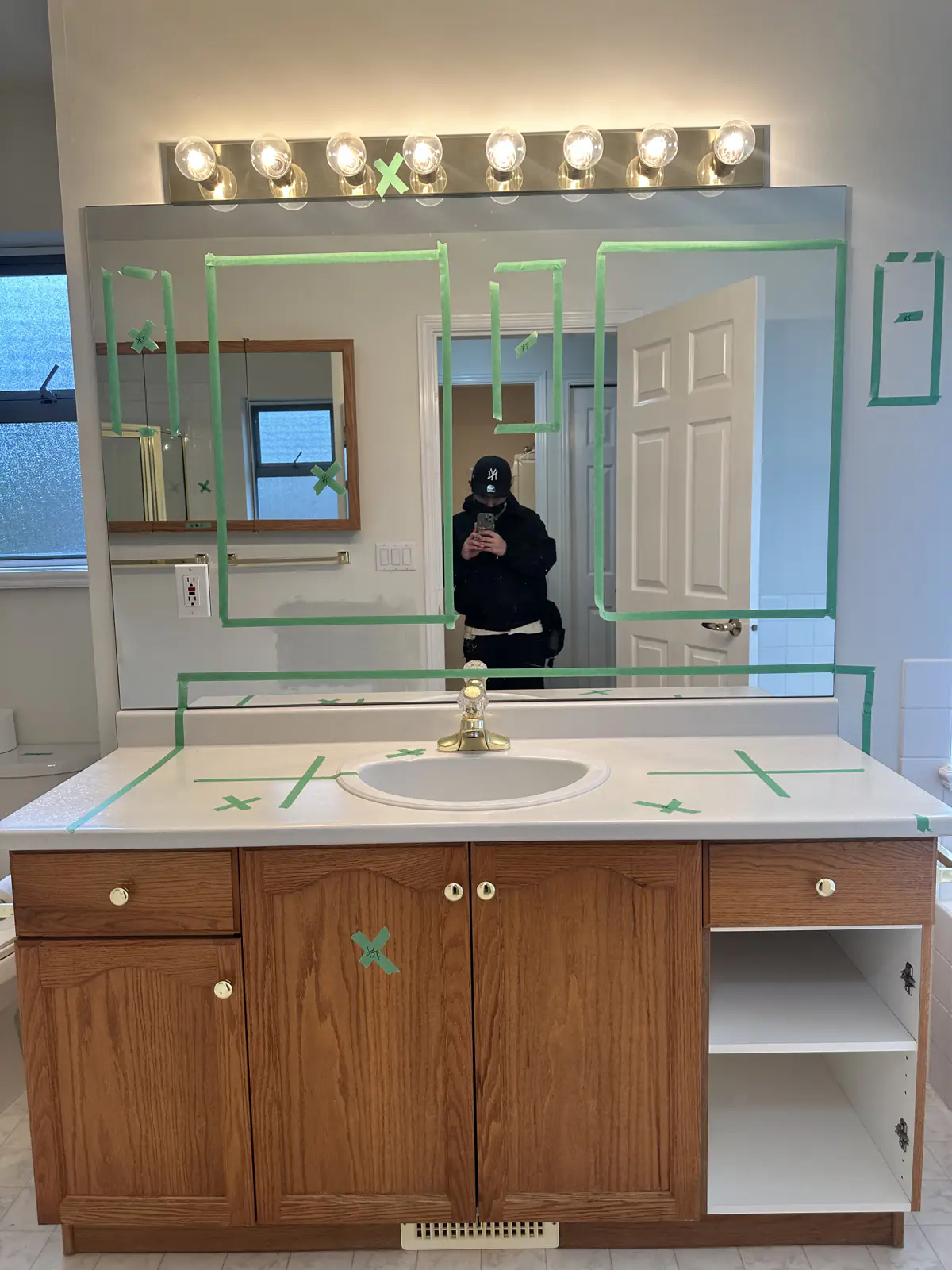
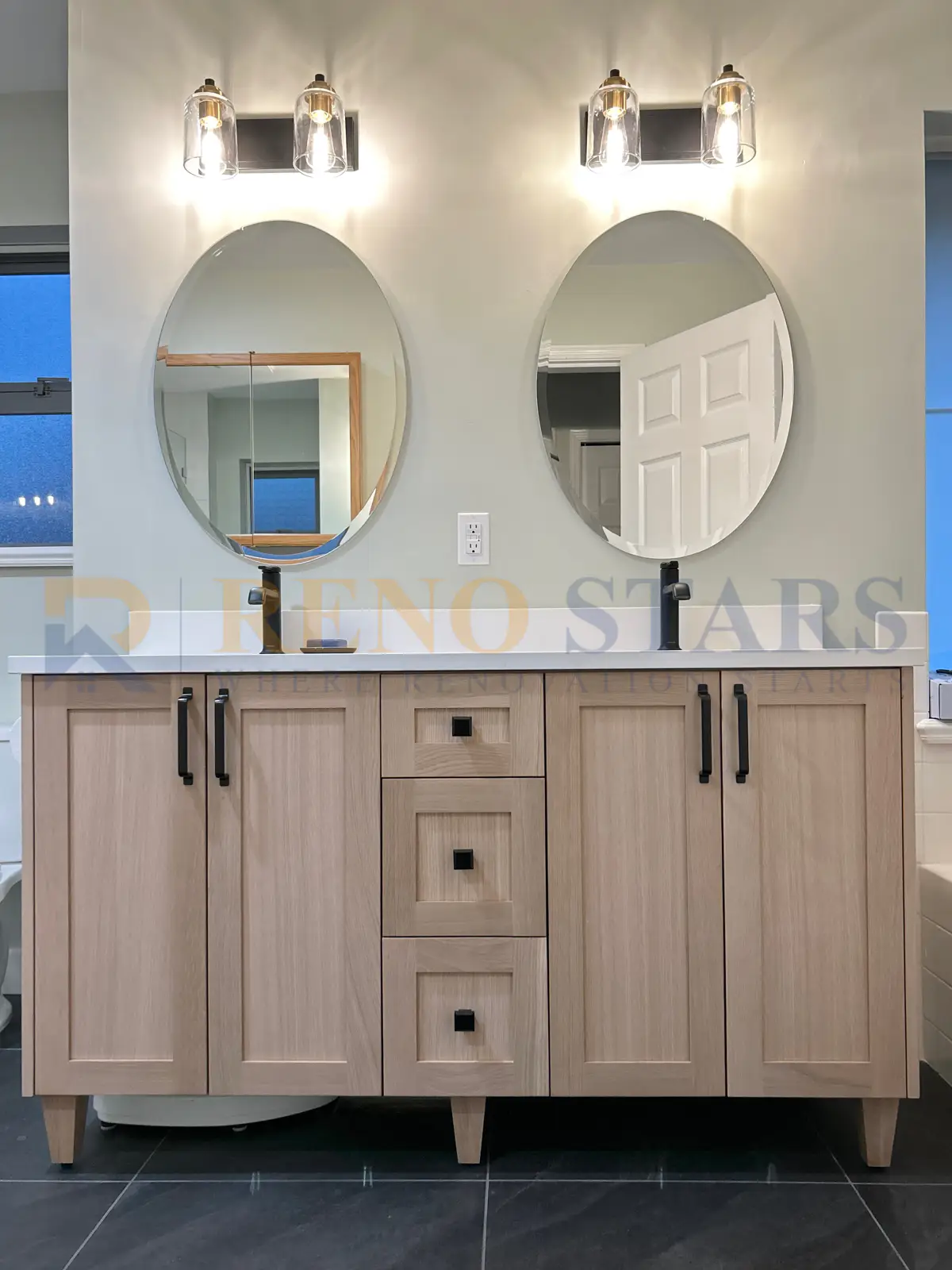
In a Richmond daughter's bathroom Reno Stars renovated with gray tiles and black fixtures, a 90 cm vanity was the maximum that allowed the shower door to open fully. In a three-and-a-half bathroom Delta townhouse renovation that took 6–8 weeks, the homeowners chose a 120 cm double-vanity and removed a recessed medicine cabinet to gain the wall space.
Planning a kitchen, bathroom, whole-home or commercial renovation? Get a free, no-obligation quote from Reno Stars.
Which faucet finish lasts in Vancouver water?
Vancouver's water supply is classified as moderately hard to hard, depending on your municipality. Hard water leaves mineral deposits on faucet finishes faster in areas with older pipe infrastructure. The finish you choose affects both appearance and maintenance frequency.
- Chrome: Most affordable, easiest to clean, but shows water spots within days in hard-water areas of Burnaby and Coquitlam.
- Brushed nickel: Hides water spots better than chrome; widely available in Vancouver home centres. Lifespan 10–15 years with normal maintenance.
- Matte black: Increasingly popular in Metro Vancouver bathrooms. Shows dust and drywall mud more than water spots. Used in the North Vancouver curbless shower project with black fixtures throughout. Requires monthly cleaning with a soft cloth only — abrasive cleaners scratch the coating.
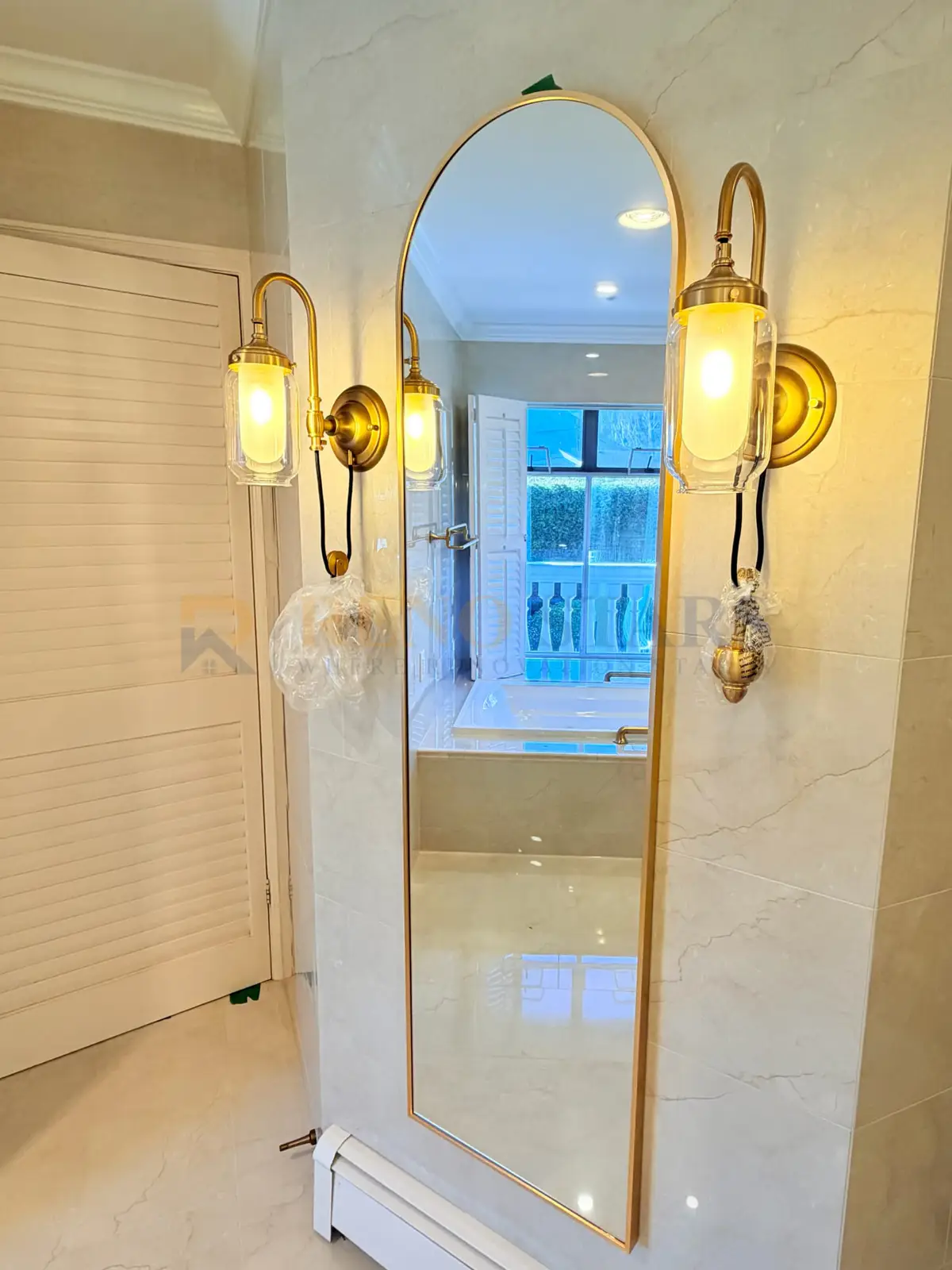
- Champagne gold: A premium finish that reads as warm in Vancouver's overcast winters. Requires annual sealing to maintain the coating. Seen in a West Vancouver full bathroom renovation where it was paired with cream marble wall tiles and frameless glass. Budget $350–$600 per faucet for this finish tier.
In the West Vancouver bathroom renovation, the homeowners kept the original soaker tub but had the surrounding walls re-tiled in cream marble. The champagne gold freestanding faucet and grab bar became the room's focal point. Reno Stars completed that project in 3–4 weeks.

Vanity cabinet material: solid wood vs. MDF vs. plywood
Vancouver's climate varies significantly by neighbourhood. West Vancouver and North Vancouver homes near the mountains experience higher humidity swings than Richmond or Delta, which are affected by river delta moisture. Cabinet construction matters differently depending on your area.
- Solid wood: Most durable, resists physical damage, and accepts refinishing. In a Burnaby two-bathroom renovation Reno Stars completed in 4–5 weeks, the homeowners chose solid-wood shaker cabinets in a white finish. The cabinets survived a construction dust storm from the adjacent kitchen renovation with no swelling.
- Plywood (exterior-grade): Used by premium Vancouver renovators as a solid-wood alternative. Handles humidity well. Acceptable in any Metro Vancouver municipality.
- MDF (medium-density fibreboard): Budget option. Swells visibly if water reaches the seams — a real risk in families with young children. Not recommended for master bathroom vanities in Vancouver.
The Vancouver custom whole-house renovation included a master bathroom with solid-wood custom cabinetry that was built on-site to fit a non-standard alcove. Reno Stars managed that whole-house project in 3–4 weeks for the bathroom phase alone.
Countertop material: quartz vs. granite vs. laminate
Bathroom vanities sit directly above water sources, receive daily condensation from towels, and in Metro Vancouver homes may also be exposed to humidity from open windows. The countertop material you choose determines how much ongoing sealing maintenance is required.
- Quartz: The most practical choice for Vancouver bathrooms. Non-porous, requires no sealing, resists staining from toothpaste and hair products. Available in white, gray, and concrete-look finishes that match Vancouver's contemporary renovation aesthetic. Budget $55–$120 per square foot installed.
- Granite: Requires annual sealing. Porous surface absorbs toothpaste and cosmetics if not maintained. In the Delta townhouse renovation, granite was used on the primary bathroom countertop and the homeowners reported no issues over 18 months.
- Laminate: Budget-friendly at $15–$35 per square foot installed. Shows seams, can delaminate near sinks over time, and has a shorter lifespan than stone. Acceptable for guest bathrooms or rental property renovations.
ADA-compliant and aging-in-place vanity choices
Vancouver's population is aging alongside the rest of BC. If you are renovating a bathroom for a parent who plans to stay in the home long-term, or you are the homeowner who intends to age in place, vanity height and clearance matter.
- Raised toilet seats (43–46 cm bowl height) pair with a vanity at 81–86 cm for accessible reach.
- A curbless shower — which Reno Stars installed in a North Vancouver luxury bathroom renovation — removes the threshold barrier entirely and is considered best practice for aging-in-place bathroom design in BC.
- Pendant-accessible faucets with lever handles are easier for arthritic hands than cross handles or knob-style faucets.
- Vancouver homeowners aged 55+ may qualify for the BC Rebate for Accessible Home Renovation (RENO) program — contact a Reno Stars project consultant to confirm eligibility before signing a renovation contract.
Layout: single vanity vs. double vanity vs. floating vanity
The choice between a single and double vanity depends on how the bathroom is used in practice. In a North Vancouver bathroom Reno Stars renovated with black fixtures and textured tile, a single floating vanity freed up floor space that made the room feel twice as large. In a Richmond bathroom renovation with gray tile and black fixtures, the homeowners opted for a single 90 cm vanity to preserve shower space.
- Single vanity (90 cm): Works in bathrooms under 5 square metres, powder rooms, and secondary baths used by children or guests.
- Double vanity (120–150 cm): Appropriate for master bathrooms used by two adults simultaneously. Requires a bathroom at least 7 square metres to maintain circulation.
- Floating vanity: Elevates the cabinet off the floor, creating visual openness and making cleaning the floor easier. Cannot be wall-mounted in Vancouver condos without confirming the wall is structural or using blocking in a solid-wall renovation.
See the Delta townhouse three-and-a-half bathroom project and the North Vancouver curbless shower project for real examples of how vanity choices shaped the final bathroom design.
Planning a kitchen, bathroom, whole-home or commercial renovation? Get a free, no-obligation quote from Reno Stars.
Frequently Asked Questions
What vanity width works in a Vancouver condo bathroom?
A 60 cm vanity fits most Vancouver condo secondary bathrooms. For a master bath, a 90 cm vanity is the minimum comfortable size. Measure the wall length and the clear floor space — you need at least 90 cm of open floor in front of the vanity to open drawers and stand comfortably.
Does Vancouver's hard water affect faucet finishes?
Yes. Hard water areas in Burnaby, Coquitlam, and parts of Surrey accelerate mineral deposit buildup on chrome and polished nickel. Brushed nickel, matte black, and champagne gold finishes hide water spots better. Installing a water softener also extends the life of any faucet finish.
How long does a bathroom vanity installation take?
A vanity-only swap — replacing the cabinet and faucet without moving plumbing — takes one to two days. If plumbing needs to be moved, budget three to five days. Reno Stars completed a two-bathroom renovation in Burnaby in 4–5 weeks; the vanity and all fixtures were installed in the second week.
What is the best countertop material for a Vancouver bathroom?
Quartz is the best all-round choice for Vancouver bathrooms. It does not require sealing, resists Vancouver's hard water staining, and holds up to daily condensation from towels and toiletries. Budget $55–$120 per square foot installed for a quality quartz countertop from a Metro Vancouver supplier.
How do I choose between a single and double vanity?
Choose a double vanity (120 cm or wider) if two adults use the bathroom simultaneously and the room is at least 7 square metres. Choose a single vanity (90 cm) in secondary bathrooms, powder rooms, or when you need to preserve floor space for a larger shower or bathtub.
Reno Stars
Professional renovation company serving Metro Vancouver with 20+ years of experience, $5M CGL insurance, WCB coverage, and up to 3-year warranty.