
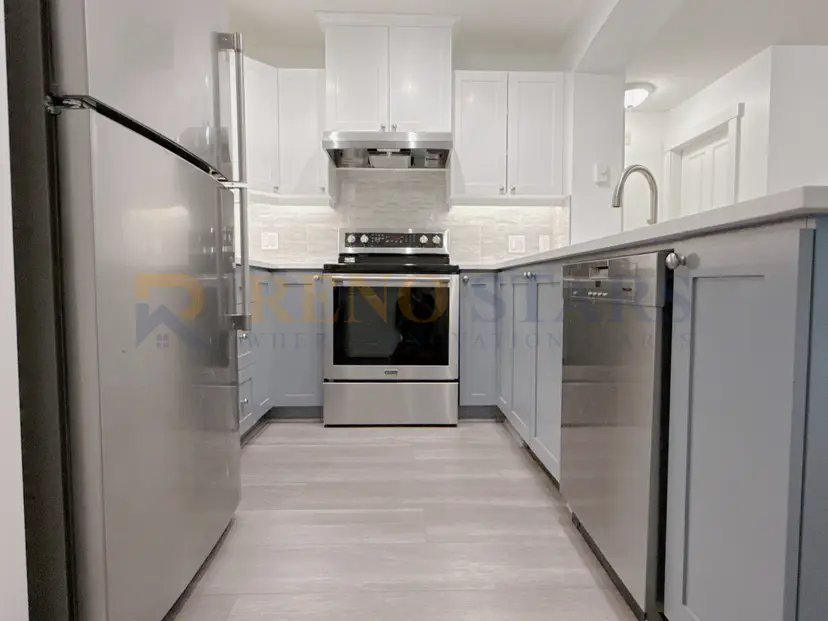
Kitchen Appliance Installation During Renovation in Vancouver: What to Plan Before, During and After
Appliance installation mistakes cost Vancouver homeowners $1,500–$4,000 in rework. Learn exact rough-in specs, lead times, costs and sequence for dishwashers, ovens, cooktops and range hoods.
Most Metro Vancouver homeowners focus on cabinetry, countertops and tile during a kitchen renovation — then discover their appliances were never planned for the space. Appliance installation errors are among the most expensive callbacks Reno Stars sees on finished projects: a dishwasher that cannot fit its cabinet opening, a range hood ducted to the wrong location, or a refrigerator that blocks a drawer. The problem is always planning, not the appliance itself. This guide covers every appliance decision point in a Vancouver kitchen renovation, with the rough-in requirements, lead times and costs that matter in 2026.
When to Order Appliances During a Vancouver Kitchen Renovation
The single most consequential timing decision in any kitchen renovation is when to order appliances. Reno Stars recommends placing appliance orders the same week the contract is signed, not after cabinets are measured. Appliance lead times in Vancouver for 2026 run eight to twenty weeks for built-in models and four to twelve weeks for freestanding units. Stocking delays at local showrooms compound these timelines, especially for Bosch, Miele, Thermador and other European brands that Metro Vancouver homeowners increasingly specify.
Ordering early means your contractor can build the cabinet plan around exact appliance cut sheets. Every appliance has a rough-in diagram — a technical drawing showing exactly where electrical outlets, water supply lines, drain connections and ducting must be positioned relative to the cabinet opening. Without these diagrams in hand when cabinetry is fabricated, modifications after the fact cost $800 to $3,200 per appliance in rework.
Electrical Rough-In Requirements for Kitchen Appliances
Electrical rough-in happens before drywall, typically in the first or second week of demo. Kitchen appliances have specific electrical requirements that must be identified before wires are run.
- Dishwasher: Dedicated 15-amp circuit, duplex outlet mounted in the adjacent cabinet toe-kick area, water supply line and drain hose routed to the sink plumbing.
- Refrigerator: Dedicated 20-amp circuit, outlet mounted in the adjacent cabinet or directly behind the fridge — never inside the appliance cavity. A fridge on a shared circuit trips GFCI and can spoil food.
- Wall oven or range: 240-volt, 40- to 60-amp dedicated circuit depending on wattage. Electric ranges in Vancouver typically require a NEMA 14-50R outlet. Gas ranges require a 120-volt outlet for ignition and a gas supply line.
- Cooktop: Electric cooktops require 240-volt, 30- to 50-amp dedicated circuit. Induction cooktops in Vancouver are increasingly common in 2026 and require the same circuit as an electric cooktop but with stricter requirements for compatible cookware.
- Range hood: Most ducted range hoods require a dedicated 15- or 20-amp circuit. Inline fan boosters for long duct runs also require a separate circuit. Under-cabinet microhoods can often share the kitchen general lighting circuit.
- Microwave (built-in): Dedicated 20-amp circuit if installed over a cooktop or as a built-in unit. Countertop microwaves require only a standard outlet.
- Wine fridge: Dedicated 15-amp circuit. Cooled wine refrigerators draw more power than standard bar fridges and should never share a circuit with other appliances.
- EV charger (garage or adjacent): A 240-volt, 50-amp circuit for a Level 2 EV charger is increasingly specified in new Vancouver home renovations. This is separate from the kitchen panel but often discussed during whole-house renovations.
Vancouver homes built before 1990 frequently have 100-amp electrical service panels. A full kitchen renovation that adds multiple 240-volt appliance circuits may require a panel upgrade to 200 amps. The cost of a panel upgrade in Vancouver ranges from $3,500 to $8,000 in 2026, typically requiring a permit and BC Electrical Safety Authority inspection.
Plumbing Rough-In for Dishwashers and Refrigerators
Dishwasher installation requires both a hot-water supply connection and a drain line. The hot water supply branches from the sink hot water line, typically with a 3/8-inch compression fitting. The drain hose routes to the dishwasher connection on the garbage disposal or directly to the drain pipe under the sink. Reno Stars always installs a secondary shut-off valve for the dishwasher supply line — this prevents a single point of failure from flooding the kitchen subfloor without the homeowner having to shut off the main water supply.
Water dispenser and ice-maker lines for French-door refrigerators require a 1/4-inch OD copper or braided stainless supply line run to the refrigerator location. This line should have its own shut-off valve and must be installed before the cabinet floor is closed in — accessing it later requires cabinet removal.
Range Hood Ducting: Vancouver Requirements and Common Mistakes
Vancouver Building Bylaw requires that range hoods exhausting grease-laden air be ducted to the exterior. Rigid metal ductwork (galvanized steel or aluminum) is required — flexible duct is prohibited by most Vancouver municipal building departments for range hood applications because it collapses over time and creates fire hazards.
The duct route matters enormously for performance. Every elbow fitting reduces airflow by approximately 10 to 15 percent. A range hood with a 6-inch outlet that runs 8 feet of straight duct with two elbows will move roughly 30 percent less air than the same hood with a straight 3-foot run. Reno Stars specifies straight-run ducting with a maximum of one elbow whenever structural conditions permit.
For condos in Vancouver where exterior wall penetration is restricted by strata bylaws, a recirculating (duct-free) kit is sometimes the only option. These kits use charcoal filters and are significantly less effective at removing grease and cooking odors — something buyers should understand before specifying a ductless hood on a gas cooktop.
Built-In Appliance Dimensions: What Your Cabinet Maker Needs to Know
Built-in appliances require precise cabinet openings. Manufacturers specify minimum clearances and opening dimensions that differ from model to model within the same product line. Always provide cabinet makers with the exact model number, not just the product family.
- Dishwasher: Standard opening is 24 inches wide, 34 to 35 inches tall from floor to countertop. Front-panel dishwashers (custom panel that matches cabinetry) require additional depth clearance for the control panel and door mechanism.
- Wall oven: Single ovens typically require a 24- to 30-inch wide opening, 28 to 30 inches tall. Double ovens stack and require a 48- to 60-inch tall opening. Ovens are always installed before countertops so the unit can be lifted into the cabinet from below.
- Cooktop: Standard cut-out is 30 or 36 inches wide, requiring a 22- to 24-inch deep cabinet. Induction cooktops require the same cut-out as electric smoothtop models but need adequate ventilation below because the electronics generate significant heat.
- Refrigerator (built-in): Built-in refrigerator columns require cabinet-depth matching — the appliance sits flush with the cabinet face, not proud of it. The opening must be taller than the refrigerator by 1 to 2 inches to allow the appliance to be rolled in after flooring is installed.
- Microwave drawer: Installed below the countertop at standard counter height (36 inches to bottom of cabinet). The cut-out must account for the door swing clearance and ventilation requirements specified by the manufacturer.
- Warming drawer: Typically installed below a wall oven at 8 to 14 inches tall, same width as the oven above it. Requires a dedicated 15-amp circuit.
Installing Appliances After Cabinetry and Countertops
Appliances are installed in a specific sequence that protects them from damage during the remaining finish work. Reno Stars follows this order:
- After cabinet boxes are installed, before countertops: Dishwasher, built-in ovens, cooktop, and any appliance that sits inside or below a cabinet are installed first so they can be raised or adjusted relative to the cabinet structure.
- After countertops are templated but before countertop fabrication: Cooktops and integrated refrigerator columns are measured for templating. Never caulk or seal these units before the countertop template is confirmed — the template requires access to all four sides of the opening.
- After countertops are installed: Slide-in ranges, freestanding refrigerators, over-the-range microwaves and warming drawers go in after stone or solid surface is in place. This prevents damage from the heavy loads and impact risks of countertop installation.
- Final trim and connection: Appliance doors are adjusted, integrated panels are attached, and all connections — electrical, plumbing, ducting — are verified and tested. Each appliance runs a full cycle before the kitchen is signed off.
What Kitchen Appliance Installation Costs in Vancouver (2026)
Appliance costs in Metro Vancouver are rising with import tariffs and currency fluctuation. Supply chain surcharges on European appliances have added 8 to 15 percent to landed costs since 2024. Below are the installed cost ranges Reno Stars sees in Vancouver projects in 2026, inclusive of rough-in, connection and labour but exclusive of the appliance purchase price.
| Appliance | Rough-In Cost | Connection / Install | Notes |
|---|---|---|---|
| Dishwasher | $250 – $600 | $180 – $350 | Water supply, drain, electrical |
| Refrigerator (water line) | $200 – $450 | $120 – $250 | Line must be roughed in before cabinet floor closes |
| Wall oven (electric) | $400 – $900 | $280 – $500 | 240V circuit; gas oven adds $300 – $600 for gas line |
| Cooktop (electric/induction) | $300 – $700 | $200 – $400 | Induction requires same electrical as electric smoothtop |
| Range hood (ducted) | $350 – $800 | $250 – $550 | Rigid duct required; flexible prohibited |
| Built-in microwave | $150 – $350 | $180 – $350 | Dedicated circuit if over cooktop |
| Wine fridge | $150 – $300 | $100 – $200 | Requires stable, dedicated circuit |
| Electrical panel upgrade | $3,500 – $8,000 | Permit + ESA inspection | May be required for homes pre-1990 with 100A service |
These costs reflect work by a licensed Vancouver renovation contractor and licensed electricians or plumbers. Appliance manufacturers' warranties are typically voided if installation is not performed by a licensed contractor in British Columbia.
What Homeowners Forget About Appliance Installation in Vancouver Condos
Vancouver has one of the highest condo-per-house ratios in Canada. Condo renovations introduce appliance installation complexities that do not apply to single-family homes. Strata bylaws in most Metro Vancouver buildings restrict:
- Noise hours: Appliance installation involving power tools, concrete cutting or duct work may be restricted to business hours — typically 8:00 a.m. to 6:00 p.m. Monday through Saturday in most stratas.
- Duct modifications: Connecting a range hood to a building's common exhaust system requires strata approval and a mechanical permit from the City of Vancouver. This process adds four to eight weeks to a kitchen renovation timeline.
- Electrical upgrades: Condo electrical panels are often shared or metered through the strata corporation. A panel upgrade is not always possible in a condo unit — verify with the building superintendent before committing to appliances that require 240V circuits.
- Delivery access: Built-in appliances must fit through the building's elevator or stairwell. Measure your appliance before purchase. A 36-inch wide French-door refrigerator cannot be carried upright in most Vancouver highrise elevators — it must be laid down, which risks internal compressor damage if not done correctly.
FAQ: Kitchen Appliance Installation in Vancouver Renovations
Do I need a licensed contractor to install kitchen appliances in Vancouver?
For hardwired appliances — cooktops, wall ovens, range hoods, dishwashers — BC law requires a licensed electrical or plumbing contractor to make the final connection. The rough-in work must be performed or supervised by a licensed electrical contractor. A licensed renovation contractor like Reno Stars coordinates all licensed trades for appliance rough-ins as part of the kitchen renovation contract.
When should I order appliances for my Vancouver kitchen renovation?
Order appliances the same week your renovation contract is signed. Built-in appliance lead times in Vancouver for 2026 range from eight to twenty weeks. Ordering before cabinet fabrication means your Reno Stars project manager can build the cabinet plan to exact appliance specifications, eliminating costly re-work.
How much does appliance installation cost in a Vancouver kitchen renovation?
Rough-in and connection costs per appliance range from $350 to $1,450 depending on the appliance type and whether electrical, plumbing or ducting upgrades are required. A full kitchen with six built-in appliances typically adds $2,800 to $7,200 in rough-in and installation costs beyond the appliance purchase price. Pre-1990 homes with 100-amp panels may require an electrical service upgrade at additional cost of $3,500 to $8,000.
Can I install a gas range in a Vancouver condo?
Gas ranges are permitted in most Vancouver residential buildings but require a gas supply line installation by a licensed gas fitting contractor. Some newer Vancouver condo buildings restrict gas connections to maintenance-managed common equipment — verify with your building superintendent before specifying a gas range. The alternative is a induction cooktop, which provides comparable searing performance and is increasingly specified in Vancouver condo renovations in 2026.
What is the most expensive appliance mistake in Vancouver kitchen renovations?
The most expensive mistake is ordering appliances after cabinetry is fabricated. Without exact model cut sheets during cabinet manufacturing, openings are built to standard rough dimensions rather than the specific appliance dimensions. Fixing a mis-sized cabinet opening requires reframing, refabricating and reinstalling cabinetry — typically $1,500 to $4,000 in additional costs. Ordering appliances on day one of the renovation prevents this entirely.
Planning your appliance installation before your kitchen renovation starts is the single most effective way to control costs and avoid delays in Vancouver. Reno Stars reviews appliance specifications as part of every kitchen renovation scoping meeting, coordinating with cabinet makers, electricians and plumbers to ensure every connection is ready when the appliance arrives. Contact Reno Stars for a free quote on your Vancouver kitchen renovation.
Reno Stars
Professional renovation company serving Metro Vancouver with 20+ years of experience, $5M CGL insurance, WCB coverage, and up to 3-year warranty.